
How a Defence Innovation Module Led One Master's Student to the Royal Navy's Leadership Symposium
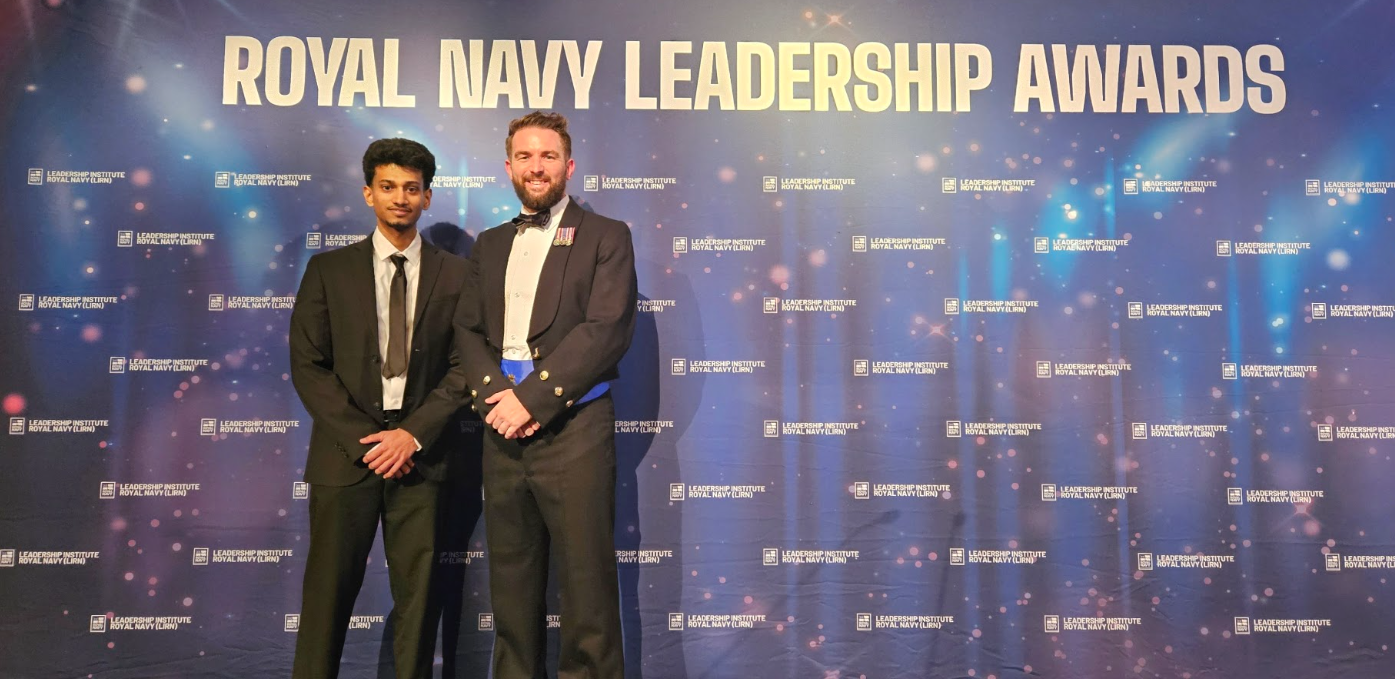
Gautam Anilkumar, an MSc student from India, was selected to attend the First Sea Lord's Annual Leadership Symposium after his insightful performance on Enterprise Lab, a module run by the University of Leeds. The module is part of the H4MoD programme, Hacking for the Ministry of Defence, delivered in partnership with the Common Mission Project. The invitation to the symposium came from their problem sponsor on the module, PO Ryan Scott.
Enterprise Lab and Navy-138
Enterprise Lab matches student teams with a live challenge from a defense or government agency. Over ten weeks, teams conduct research, interview stakeholders, test hypotheses, and develop a solution. For Anilkumar, whose background is in product design and startups, the module layout was a significant shift. He expressed that “it asked me focus on solving a human problem for a public institution where the stakes are not revenue, they are operational readiness."
His team was assigned to Navy-138, titled Fit to Lead, a challenge submitted by the Royal Navy Leadership Institute. The brief was to better understand the link between the health and fitness of naval leaders and the performance of their teams, and how that understanding could be put into practice. The team brought together five members from five countries: Ryan from the UK, Maryam from Qatar, Jiaying and Ha from China, and Anilkumar from India. Anilkumar described the cultural mix as a source of early friction and later strength. "That diversity created productive tension in the early weeks, and sorting through our different instincts about hierarchy and authority under real time pressure turned out to be one of the most valuable parts of the experience."
The team worked to a weekly rhythm, interviewing Royal Navy personnel across ranks and unit types, synthesising findings together, and using frameworks such as the Mission Model Canvas to map stakeholders and shape possible solutions. Each Friday, the team presented its progress to professors, mentors, and peers. Anilkumar said the feedback sessions is where much of the real learning happened, pushing the team to sharpen its thinking and iterate faster.
Though highly successful, the project did not go entirely to plan. Several weeks in, Royal Navy personnel involved in the project were pulled away due to active operational demands, and a planned site visit to Navy HQ in Portsmouth was cancelled for the same reasons. Anilkumar described the setback as unexpected opportunity to gain further insight. "It was deflating at the time, but it taught me something worth carrying forward. Research under constraint is still research. You adapt, find new angles, and let the limitations sharpen your thinking rather than stop it." By the end of the project, the team had completed 47 interviews.
The team's thinking shifted substantially over the ten weeks. They began with the assumption that physically fit leaders produce better-performing teams. As they developed their research, interviews repeatedly pointed to something else, the visibility of a leader's behaviour mattered more than their fitness level. Anilkumar described that “a leader who trains alongside their team earns a kind of credibility that no policy can replicate.” This insight, ultimately shaped the team's final solution framework.
The module concluded with a final presentation attended by the team's Royal Navy problem sponsors, mentors, a defence advisor, and the wider cohort. The team walked them through their research journey: what they had tested, what they had rejected, and what they had built. Anilkumar described presenting work that had evolved week by week through real conversations with real people in the Navy as "different from any academic submission I had been part of before." They credited Professor Richard Tunstall, Rebecca Padgett, and the Royal Navy personnel who gave their time as central to the experience.
The Symposium: 13 May 2026
It was this work on Navy-138 that led PO Ryan Scott to offer Anilkumar a place at the First Sea Lord's
 Annual Leadership Symposium. Anilkumar attended the event at the Leonardo Royal Hotel near Tower Bridge, London, joining around 450 attendees: Royal Navy personnel from across the ranks, NATO representatives, delegates from the US Embassy, and speakers from Ukraine.
The Opening Address
General Sir Gwyn Jenkins, the First Sea Lord, opened the day. He took the role in May 2025, becoming the first Royal Marine ever appointed to lead the Royal Navy, and used the address to set out a direct message about the Navy's current position and its target of warfighting readiness within four years.
For Anilkumar, it was his focus on leadership culture that stood out most. General Jenkins spoke about ongoing trials to identify leaders who receive excellent performance reports while quietly damaging those working under them, describing this as a warfighting problem rather than an HR one. Anilkumar exclaimed
That framing stuck with me. Toxic leadership isn't just an organisational inconvenience, it actively degrades a team's ability to function when it matters most
The session Anilkumar described as the most memorable was a talk by Iryna Nykroak, a Ukrainian MP, who spoke on leadership and warfighting insights from the front lines.
Nykroak described women who joined the war effort with no military background. Teachers, social workers, and others who had never anticipated this kind of life, trained themselves to handle weapons and defend their communities out of necessity. She was also candid about the friction women faced entering a domain historically dominated by men, and how that resistance eased not through persuasion, but through the demands of the situation itself.
"War doesn't ask who's traditionally the job done," Anilkumar said, reflecting on the talk. "I work in product and startups, and I spend a lot of time thinking about team performance and what conditions allow people to do their best work. Sitting with that kind of knowledge from someone inside an active conflict is different from reading about it in a module."
The day closed with a formal awards dinner. Three courses, mess dress and black tie with leadership awards presented by the Fleet Commander to junior and senior personnel recognised for their impact across the service. Anilkumar sat alongside engineers and junior pilots whose careers differ significantly from their own, but who they found were grappling with the same questions of culture, trust, and leadership. Anilkumar described it simply: "It was an unusual evening. A good one."
Looking back on the day, Anilkumar said they arrived as a student and left with a different understanding of psychological safety as “less of a concept and more as a decision made or avoided in small moments, which is exactly what the day was designed to do." Anilkumar credited PO Ryan Scott, Professor Richard Tunstall, and the University of Leeds for making the opportunity possible.